
Coldwell Banker Tomlinson Blog
 RSS Feed
Subscribe and receive email notifications of new blog posts.
RSS Feed
- 2026 | 20 Posts
- 2025 | 24 Posts
- 2024 | 24 Posts
- 2023 | 39 Posts
- 2022 | 75 Posts
- 2021 | 57 Posts
- 2020 | 49 Posts
- 2019 | 9 Posts
@Home with Coldwell Banker Tomlinson | 9 Posts
Buying A Home | 9 Posts
Doers of Good | 7 Posts
Family Fun | 4 Posts
Food | 6 Posts
Holidays | 4 Posts
Home Improvement | 23 Posts
Home Maintenance | 5 Posts
Market Reports | 145 Posts
Moving Tips | 2 Posts
Near Nature | 1 Posts
News | 14 Posts
Selling A Home | 10 Posts
Spokane Life | 53 Posts
Spring Cleaning | 1 Posts
Technology | 1 Posts
Uncategorized | 3 Posts
April
24
24
National Adopt a Shelter Pet Day: How to Get Your Home Ready for a New Pet
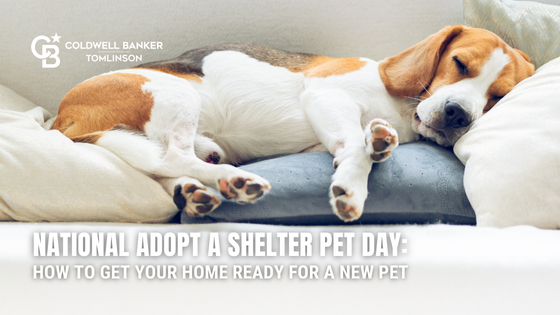
Nothing compares to the companionship and love you share with a pet. On April 30th, which is National Adopt a Shelter Pet Day, give a home to not just any pet but a shelter pet who is in need. But what do you need to know before introducing a new animal to your home? Here are a few tips from our real estate agents to help you prepare your home for your new lifelong companion.
- Make a Supply List and Go Shopping
If you don't already have a pet, there are probably a lot of supplies to acquire before you bring home your new friend. Ensure you have, at minimum, things like food, bowls for water and food, litter and litter pan for a cat, and a collar and leash for a dog. If you're adopting a puppy or a dog, a kennel is a good investment as it'll help with potty training and general training. - Pet-Proof Your Home
If you're planning to adopt a small animal, you won't need to do a lot of pet-proofing unless the critter is expected to get a lot of time outside their enclosure (for example, in the case of ferrets, bunnies, or other house-trained small animals). For all others, be sure your floors are clean, cords are covered, and all other potential hazards are out of the way. You may also want to put away anything especially fragile, valuable, or irreplaceable, especially if you're adopting a young cat or dog whose house habits you don't yet know. - Set Up Your Yard
Not all fenced-in yards are set up for a dog, so take the time to walk your fence line. Make sure your fences are tall and strong and don't have any gaps where a determined pup could squeeze through, and watch for potential hazards that need to be eliminated. Cats and some small animals may also benefit from an outdoor enclosure such as a "catio" where they can enjoy the benefits of sunshine and fresh air on occasion. - Prepare an Introduction Space
Especially if you are getting a kitten or puppy or adding a new pet to a household with other animals already in it, having a small, confined, and separate space for your new pet is generally a good idea. For instance, a new cat can be kept in a separate room at first, while a puppy or kitten might benefit from a pet playpen. Baby gates can be used to confine your new pet, especially useful with puppies that aren't yet potty trained. - Plan a Routine
Whether your new pet is your first or one of many, it's helpful to establish a routine from the very beginning. Routines make it easier to potty train, let your new pet know when to expect meals, and help them to settle down at night. Try to maintain consistency with your routines to help your new pet get the hang of them faster. For instance, always going outside to go potty first thing in the morning, last thing before bed, and right before being confined to the kennel will make potty training a new puppy more successful.
Keeping pets is much easier when you have a Spokane home of your own. Contact us today, and we'll help you find a house that your pets can call home, too!